Plumbing: Advanced Sanitation & Drainage Systems

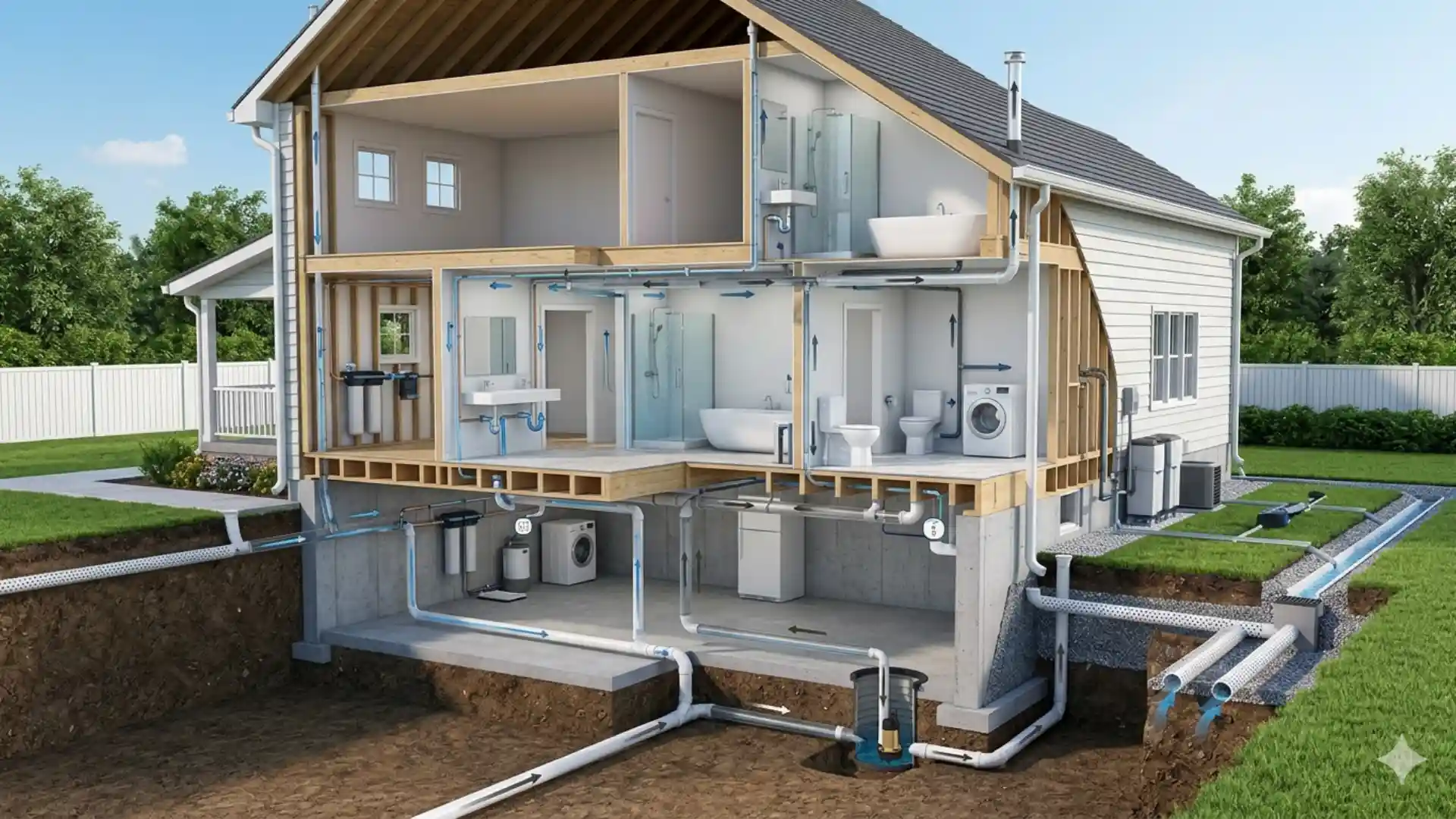
Modern homes depend on plumbing for clean water, safe wastewater removal, flood control, and hygiene. When people search for plumbing: describe the advanced sanitation & drainage systems, they usually want to understand how today’s plumbing works beyond simple pipes and drains.
Advanced plumbing is not only about fixing leaks or unclogging sinks. It includes sanitation systems, drainage networks, vent pipes, traps, backwater valves, sewage ejector pumps, trenchless repairs, greywater reuse, and smart leak detection. These systems protect your home from contamination, sewer gas, water damage, and expensive emergency repairs.
What Are Advanced Sanitation and Drainage Systems?
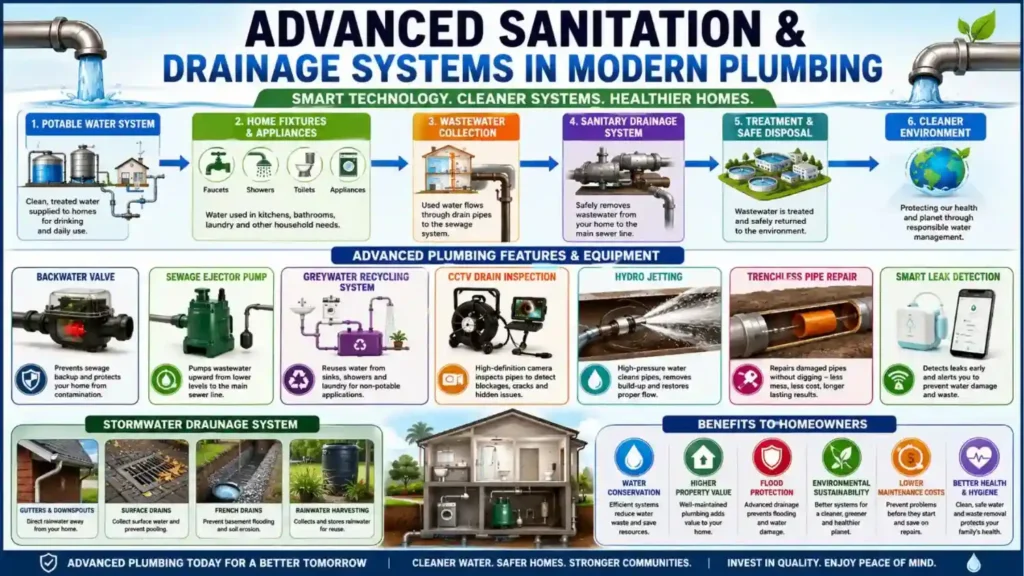
Advanced sanitation and drainage systems are engineered plumbing networks that bring clean water into a home and remove wastewater safely. They are designed to protect health, prevent contamination, improve drainage flow, and reduce water waste.
In simple words, plumbing: describe the advanced sanitation & drainage systems means explaining how clean water, dirty water, sewage, rainwater, and drainage components work together inside and outside a building.
A complete system usually includes:
- Potable water supply lines
- Sanitary drainage pipes
- Vent pipes
- P-traps and fixture traps
- Stormwater drainage
- Backflow prevention
- Sewer or septic connection
- Smart monitoring systems
Older plumbing systems mostly depended on gravity and basic pipe layouts. Modern systems are more advanced because they use better materials, smarter devices, improved design, and eco-friendly water management.
Why Modern Plumbing Matters for Homeowners
Modern plumbing is one of the main reasons American homes are safer, cleaner, and more comfortable. Without a good drainage and sanitation system, wastewater can back up, sewer gases can enter the home, and moisture can damage walls, floors, and foundations.
For homeowners in the United States, plumbing upgrades are especially important because many houses have older sewer lines, aging pipes, or basements below the main sewer level. Heavy rain, tree roots, grease buildup, and outdated materials can all create serious drainage problems.
A well-designed system helps:
- Remove wastewater quickly
- Prevent sewer backups
- Protect drinking water
- Reduce indoor odors
- Lower water bills
- Improve property value
- Prevent basement flooding
This is why plumbing: describe the advanced sanitation and drainage systems is an important topic for homeowners, remodelers, and anyone planning home improvement work.
Main Types of Plumbing Systems
A home plumbing system is usually divided into three major systems. Each system has a different job, but all of them work together to keep the home safe and functional.
| Plumbing System | Main Purpose | Common Components |
| Potable Water System | Supplies clean water for drinking, bathing, and cooking | Main water line, shut-off valve, supply pipes, faucets |
| Sanitary Drainage System | Removes wastewater and sewage from the home | Drain pipes, toilets, sinks, traps, vent pipes |
| Stormwater Drainage System | Moves rainwater away from the home | Gutters, downspouts, catch basins, yard drains |
Potable Water System
The potable water system brings clean water into your home. This water may come from a municipal water supply or a private well. It enters through the main water line and then moves through smaller pipes to faucets, showers, toilets, appliances, and water heaters.
Modern potable water systems often use PEX, copper, CPVC, or PVC pipes. These materials are selected because they are durable, corrosion-resistant, and suitable for residential plumbing. During kitchen renovations, plumbers also coordinate pipe placement with deep kitchen cabinets to ensure sinks, water supply lines, and drainage systems fit properly without reducing storage space.
A good potable water system should maintain safe pressure, clean water quality, and consistent flow. Pressure regulating valves, filtration systems, shut-off valves, and smart leak detectors can make this system more reliable.
Sanitary Drainage System
The sanitary drainage system removes used water and waste from sinks, showers, tubs, toilets, dishwashers, and washing machines. This system carries wastewater to the municipal sewer line or septic tank.
Sanitary drainage is one of the most important parts of plumbing: describe the advanced sanitation & drainage systems because it protects the home from bacteria, odors, and sewage contamination.
Drainage pipes are installed with proper slope so wastewater can flow by gravity. If the slope is too flat, solids may settle and create clogs. If it is too steep, water may move too quickly and leave waste behind.
Stormwater Drainage System
Stormwater drainage handles rainwater from roofs, yards, driveways, and outdoor surfaces. It is different from sanitary drainage because it should not carry sewage or indoor wastewater.
A stormwater system may include gutters, downspouts, French drains, catch basins, channel drains, dry wells, and grading around the foundation. Its main purpose is to keep rainwater away from the home.
Poor stormwater drainage can cause basement leaks, foundation cracks, soil erosion, mold growth, and water pooling around the house. Regular roof inspections and guidance from a roofing cop can also help homeowners identify drainage issues before they damage gutters, downspouts, or the home’s foundation.
How a Plumbing Drainage System Works
A drainage system works through gravity, air pressure, pipe slope, traps, and vents. When you flush a toilet or drain a sink, wastewater moves through fixture drains into branch lines and then into the main drain.
Vent pipes allow air to enter the system so wastewater can flow smoothly. Without vents, drains may gurgle, empty slowly, or pull water out of traps.
P-traps hold a small amount of water inside the curved pipe under sinks, tubs, and showers. This water creates a seal that blocks sewer gases from entering your living space.
In advanced plumbing, drainage may also include cameras, cleanouts, sensors, pumps, and backflow prevention devices.
Key Components of Advanced Sanitation Systems
Advanced sanitation systems include more than basic pipes. They are built with several protective components that keep wastewater controlled and separated from clean water.
Important components include:
- Soil pipes for toilet waste
- Waste pipes for sinks and showers
- Vent pipes for pressure balance
- Traps for sewer gas protection
- Backflow preventers for clean water safety
- Cleanouts for maintenance access
- Sewage pumps for low-level fixtures
Each part has a specific role. If one component fails, the whole drainage system may become inefficient or unsafe.
Backwater Valve
A backwater valve is a one-way valve installed on the main sewer line. It allows wastewater to leave your home but blocks sewage from flowing backward into the house.
This is especially useful during heavy rainfall or municipal sewer overload. Homes with basements, lower-level bathrooms, or older sewer connections benefit greatly from this device.
A backwater valve can prevent:
- Basement sewage backups
- Contaminated water entering drains
- Expensive cleanup costs
- Damage to flooring and walls
- Health risks from wastewater exposure
For many U.S. homeowners, this is one of the most valuable upgrades in plumbing: describe the advanced sanitation & drainage systems.
Sewage Ejector Pump
A sewage ejector pump is used when a bathroom, laundry room, or drain fixture is located below the main sewer line. Since gravity cannot move wastewater upward, the pump pushes waste into the main drain.
This system is common in finished basements. It allows homeowners to add basement bathrooms, laundry areas, wet bars, and utility sinks.
A sewage ejector pump usually includes a sealed basin, pump, float switch, discharge pipe, and check valve. When wastewater reaches a certain level, the pump activates automatically.
A backup power source is useful because the pump may stop working during a power outage.
Greywater Recycling System
Greywater recycling systems collect lightly used water from showers, bathtubs, bathroom sinks, and laundry. This water can be filtered and reused for toilet flushing or landscape irrigation.
Greywater does not include toilet waste. Toilet wastewater is called blackwater and requires stronger treatment.
A greywater system can help homeowners reduce water bills and support sustainable living. It is especially helpful in areas where water conservation is important.
This is one area where modern plumbing: describe the advanced sanitation & drainage systems becomes more eco-friendly and future-focused.
Trenchless Pipe Repair
Trenchless pipe repair allows plumbers to fix underground pipes without digging up the entire yard, driveway, or landscaping. It is a modern alternative to traditional excavation.
Two common methods are pipe lining and pipe bursting. Pipe lining creates a new pipe inside the damaged pipe. Pipe bursting breaks the old pipe while pulling a new pipe into place.
This method is useful for sewer lines damaged by roots, cracks, corrosion, or soil movement.
Traditional Repair vs Trenchless Repair
| Feature | Traditional Pipe Repair | Trenchless Pipe Repair |
| Digging | Large excavation required | Minimal digging |
| Yard Damage | High | Low |
| Repair Time | Longer | Faster |
| Cost Over Time | Can be higher due to restoration | Often more cost-effective |
| Best For | Severe access needs | Sewer line cracks, roots, and aging pipes |
CCTV Drain Inspection
CCTV drain inspection uses a small waterproof camera to inspect the inside of pipes. The camera shows blockages, cracks, grease buildup, root intrusion, collapsed sections, and pipe misalignment.
Instead of guessing, plumbers can locate the exact problem and recommend the right solution.
This technology is useful before buying a home, remodeling a bathroom, repairing sewer lines, or dealing with repeated clogs.
Hydro Jetting
Hydro jetting uses high-pressure water to clean the inside of drainage pipes. It removes grease, sludge, scale, roots, and debris from pipe walls.
Unlike basic snaking, hydro jetting cleans the full pipe diameter. It is useful for kitchens, sewer lines, commercial drains, and homes with recurring blockages.
However, older or damaged pipes should be inspected before hydro jetting. Too much pressure on weak pipes can cause more damage.
Smart Leak Detection and Monitoring
Smart leak detectors are becoming common in modern homes. These devices monitor water flow, pressure, and moisture. If they detect unusual water use, they can send alerts or shut off the water supply automatically.
This is helpful for preventing hidden leaks behind walls, under floors, near water heaters, or inside basements.
Smart systems can protect against:
- Burst pipes
- Water heater leaks
- Appliance hose failures
- Slow hidden leaks
- High water bills
Smart monitoring makes plumbing: describe the advanced sanitation & drainage systems more proactive instead of reactive.
Advanced Drainage Systems for Homes
Advanced drainage is not limited to indoor plumbing. Outdoor drainage is equally important because rainwater can damage the foundation, basement, driveway, and landscape.
Common residential drainage systems include surface drains, subsurface drains, slope drains, French drains, sump pumps, and gutter drainage systems.
Each system controls water in a different way.
Surface Drainage System
Surface drainage removes water from the top of the ground. It is useful for yards, patios, driveways, and areas where rainwater collects.
This system may use shallow channels, swales, catch basins, or graded surfaces to direct water away from the home.
Subsurface Drainage System
Subsurface drainage removes water from below the soil. It is useful for wet lawns, soggy gardens, and areas with poor soil drainage.
French drains are a common example. They use perforated pipes surrounded by gravel to collect underground water and move it away.
Slope Drainage System
Slope drainage moves water downhill through pipes, channels, or lined paths. It is often used on sloped properties to prevent erosion and water pooling.
This type of system must be designed carefully so water does not damage neighboring properties or public drainage areas.
Gutter and Downspout Drainage
Gutters collect rainwater from the roof. Downspouts carry that water down to the ground. If downspouts release water too close to the foundation, the basement and crawl space may become damp.
Downspout extensions, underground drain lines, and splash blocks help move water farther away from the home.
How Advanced Plumbing Protects a Home
Harappa and the History of Advanced Drainage
The phrase the plumbing Harappa advanced sanitation and drainage system is often searched because the ancient Harappan civilization is known for early urban drainage planning.
Harappan cities used covered drains, brick-lined channels, bathing areas, and planned wastewater routes. This shows that sanitation and drainage were important even thousands of years ago.
Modern systems are far more technical, but the basic goal is similar: remove waste safely, protect living spaces, and keep communities clean.
This historical example makes plumbing: describe the advanced sanitation & drainage systems more interesting because it connects ancient city planning with today’s home improvement technology.
Sanitary Plumbing vs Drainage
Sanitary plumbing and drainage are connected, but they are not exactly the same.
Sanitary plumbing usually refers to the indoor system that collects wastewater and sewage from fixtures. Drainage can include both indoor wastewater removal and outdoor rainwater management.
Sanitary plumbing handles toilets, sinks, tubs, showers, and appliances. Drainage may also include stormwater, foundation drains, yard drains, and roof runoff.
Understanding this difference helps homeowners avoid serious mistakes, such as connecting stormwater drains to sanitary sewer lines where it is not allowed.
Modern Plumbing Materials
Advanced plumbing systems use durable materials that improve performance and reduce maintenance needs.
Common materials include:
| Material | Common Use | Main Benefit |
| PEX | Water supply lines | Flexible and corrosion-resistant |
| PVC | Drain and vent pipes | Lightweight and affordable |
| ABS | Drainage pipes | Strong and easy to install |
| Copper | Water supply | Long-lasting and heat-resistant |
| HDPE | Sewer and underground lines | Durable and flexible |
Older homes may still have cast iron, clay, galvanized steel, or outdated materials. These may crack, corrode, or clog over time.
Pros and Cons of Advanced Plumbing Systems
| Pros | Cons |
| Better water efficiency | Higher upfront cost |
| Lower risk of sewer backups | Some systems require professional design |
| Improved home hygiene | Smart devices need maintenance |
| Less property damage | Greywater systems may need permits |
| Higher property value | Older homes may need pipe upgrades |
| Eco-friendly water use | Installation varies by local codes |
Health and Hygiene Benefits
Advanced plumbing protects health by separating clean water from wastewater. It also removes sewage quickly and keeps harmful gases outside the living area.
Backflow prevention stops dirty water from contaminating the water supply. Vent pipes prevent pressure problems and sewer gas buildup. Traps block odors and bacteria from entering indoor air.
This is why plumbing: describe the advanced sanitation & drainage systems is not just a technical topic. It is also about family safety, public health, and cleaner living conditions. For more home improvement, home design, and outdoor living tips, explore the practical resources available on Homebillion to help maintain every part of your property.
Environmental Benefits
Modern plumbing can reduce water waste and support environmental protection. Low-flow fixtures, greywater reuse, leak detection, and efficient drainage all help reduce unnecessary water use.
Stormwater systems also protect the environment by reducing erosion, flooding, and polluted runoff.
For homeowners, eco-friendly plumbing can mean lower utility bills and a more sustainable home.
Cost Savings Over Time
Advanced plumbing upgrades may cost more at the beginning, but they can save money over time. Preventing one sewer backup or hidden leak can protect thousands of dollars in repairs.
Smart leak detection can stop water damage early. Trenchless repairs can reduce restoration costs. Low-flow fixtures can reduce monthly water bills.
A home with updated plumbing is also more attractive to buyers because it feels safer, cleaner, and better maintained.
Common Plumbing and Drainage Problems
Even advanced systems can develop problems if they are not maintained properly.
Common issues include:
- Slow drains
- Sewer odors
- Gurgling pipes
- Clogged toilets
- Low water pressure
- Leaking pipes
- Tree root intrusion
- Basement flooding
- Sewer line backups
- Standing water in the yard
These problems should not be ignored. Small drainage issues can become expensive if wastewater damages flooring, drywall, foundations, or landscaping.
Common Mistakes Homeowners Should Avoid
Many homeowners accidentally damage their plumbing systems through daily habits.
Avoid pouring grease, oils, and coffee grounds into kitchen drains. Do not flush wipes, paper towels, cotton products, or hygiene items. These materials can block pipes and create sewer backups.
Also avoid ignoring small leaks. A slow drip may look harmless, but it can waste water and create hidden mold.
Do not use chemical drain cleaners repeatedly. They may damage pipes and do not solve the root cause of recurring clogs.
How to Upgrade an Older Plumbing System
If you own an older home, upgrading the entire system at once may not be necessary. Start with the highest-risk areas first.
A smart upgrade plan may include:
- Schedule a professional plumbing inspection
- Use CCTV inspection for main drain lines
- Replace aging or damaged pipes
- Install a backwater valve if backup risk is high
- Add a sewage ejector pump for basement fixtures
- Improve gutter and downspout drainage
- Install leak detectors near high-risk areas
- Consider low-flow fixtures and greywater reuse
This approach makes plumbing: describe the advanced sanitation & drainage systems practical for real homeowners, not just technical readers.
Maintenance Tips for Long-Term Performance
Regular maintenance keeps plumbing systems efficient and safe.
Schedule annual inspections, especially if your home has older pipes or a basement bathroom. Clean gutters and downspouts before heavy rain seasons. Test sump pumps and sewage ejector pumps to make sure they work.
Run water in rarely used drains to keep P-traps from drying out. Watch for slow drains, sewer odors, wet spots, and unusual water bills.
Hydro jetting and camera inspections may be useful if you have repeated clogs or an older sewer line.
When to Call a Professional Plumber
Some plumbing tasks are safe for homeowners, such as cleaning aerators or using a plunger. But advanced systems usually require professional work.
Call a licensed plumber if you notice sewage backup, repeated clogs, sewer smells, basement flooding, water stains, low pressure throughout the home, or unexplained water bills.
You should also hire a professional for backwater valve installation, ejector pump setup, trenchless sewer repair, greywater system design, and full pipe replacement.
Professional installation helps ensure the system follows local codes and works safely.
Content Gap Improvements Covered in This Guide
Most articles about plumbing: describe the advanced advanced sanitation & drainage systems only explain basic features like backwater valves, greywater systems, and trenchless repairs. This guide goes further by covering homeowner mistakes, Harappa’s historical sanitation system, indoor and outdoor drainage, plumbing materials, maintenance steps, and upgrade planning.
This gives readers a more complete understanding of how advanced plumbing protects modern American homes.
Conclusion
Modern plumbing is no longer just a hidden pipe system behind walls. It is a complete network designed for clean water supply, safe waste removal, flood prevention, hygiene, and sustainability. When homeowners understand plumbing: describe the advanced sanitation & drainage systems, they can make better decisions about upgrades, maintenance, and long-term property protection.
Advanced systems such as backwater valves, sewage ejector pumps, greywater recycling, CCTV inspections, hydro jetting, trenchless repairs, and smart leak detectors make homes safer and more efficient. Whether you are improving an older house or planning a new renovation, investing in better sanitation and drainage is one of the smartest ways to protect your home, health, and budget.